How to Connect WordPress to Trendhopper
Trendhopper
5 min read
Connect a self-hosted WordPress 5.6+ site to Trendhopper with the built-in Application Passwords feature. Your site must use HTTPS. WordPress.com-hosted sites use a different API and are not supported yet.
Finding your WordPress username
Use your WordPress username (not your email) and an account that can publish posts — Author, Editor, or Administrator.
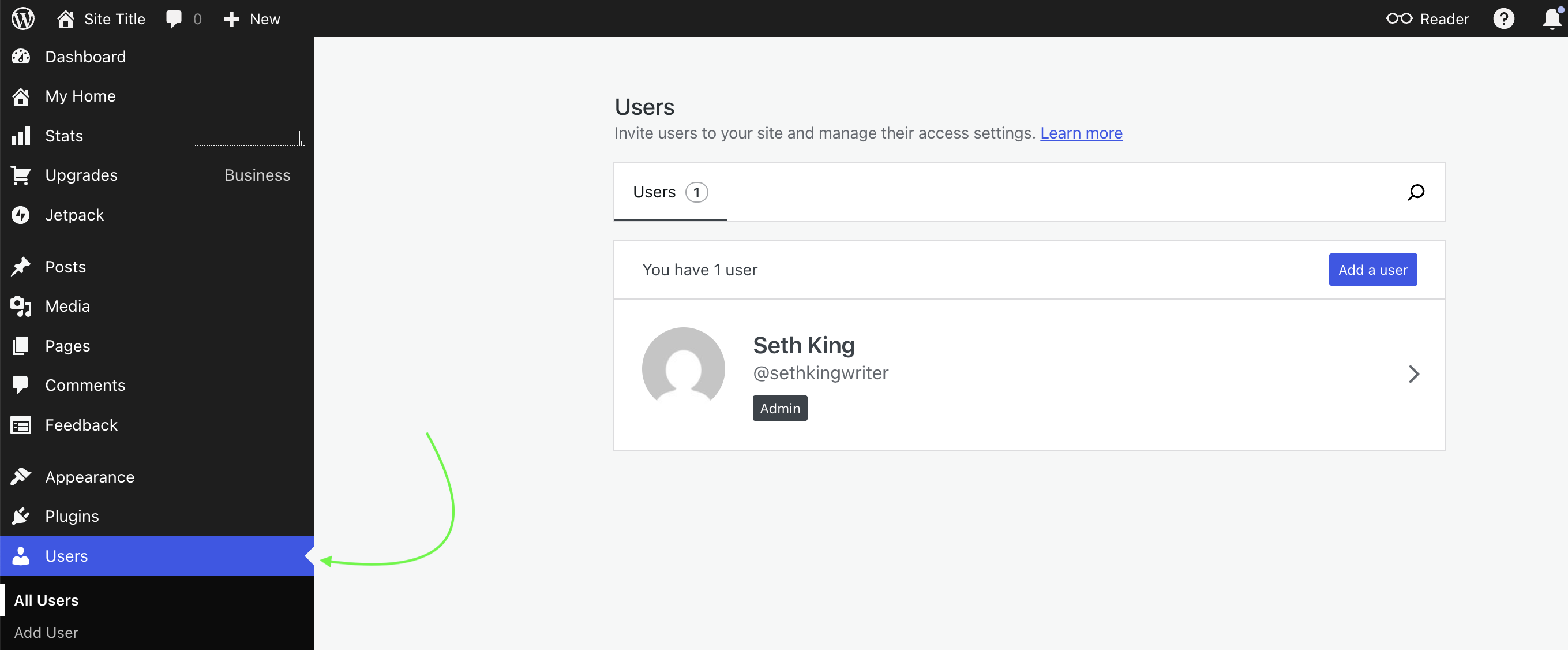
- Open your WordPress dashboard. Go to Users → All Users in the sidebar.
- Find your user account in the users list.
- Check your role. Prefer an Author, Editor, or Administrator account that can publish posts.
- Enter your username in Trendhopper under Settings → Integrations → WordPress.
How to create an application password
Use a WordPress application password — not your login password — to connect Trendhopper. Application Passwords are built into WordPress 5.6 and newer.
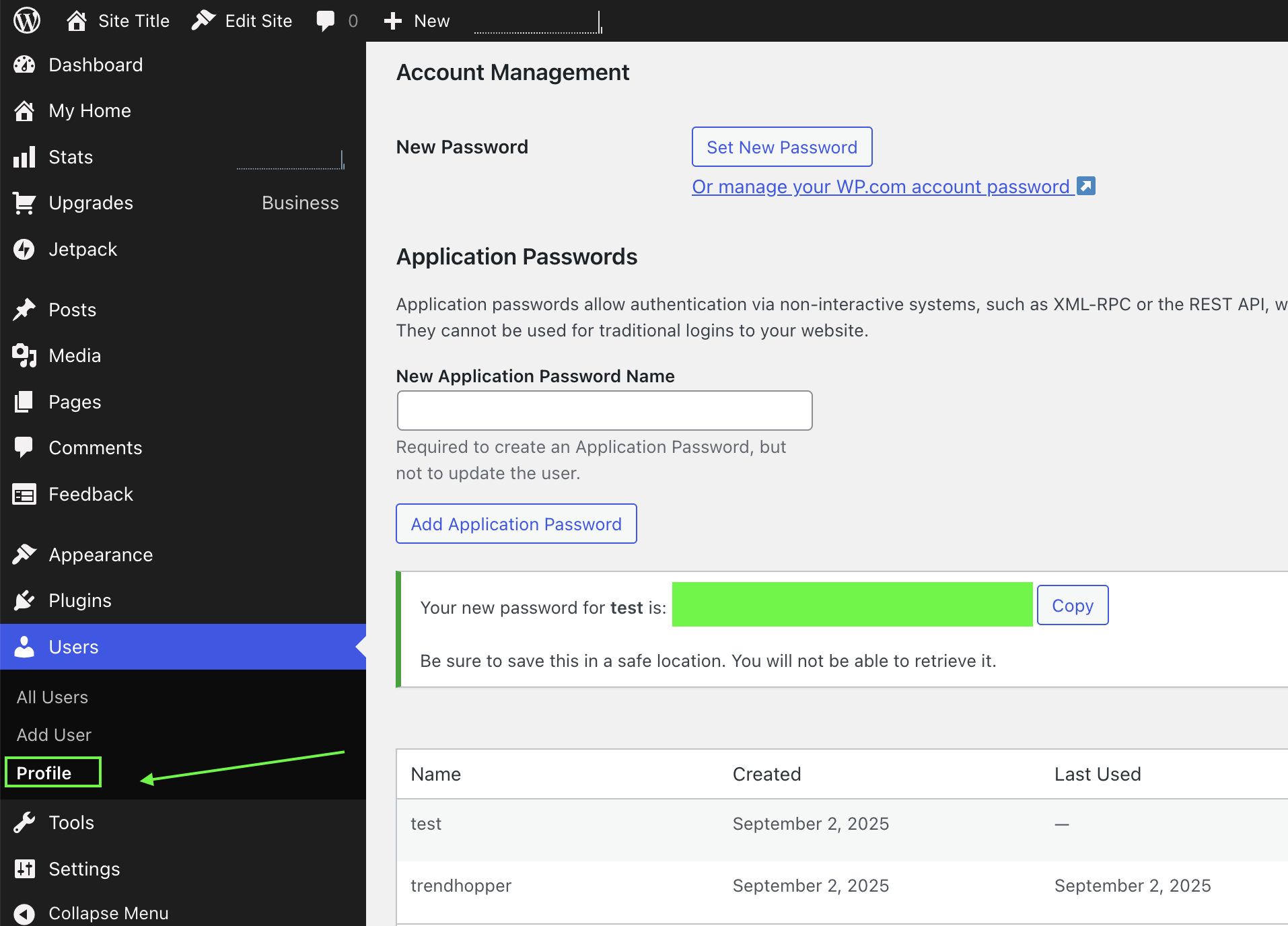
- Open your WordPress profile. Go to Users → Profile.
- Find Application Passwords. Scroll to Account Management → Application Passwords.
- Create a new password. Enter a name like Trendhopper and click Add Application Password.
- Copy the generated password once and paste it into Trendhopper. WordPress shows spaces between groups; either format works.
If Application Passwords are missing: confirm the site uses HTTPS and WordPress 5.6 or newer. Security plugins and hosting policies can disable Application Passwords — ask the site administrator to enable them. If the site already uses the third-party JWT Authentication plugin, Trendhopper can use it as an advanced fallback after Application Password authentication fails.
Test the connection
Save the settings, then choose Test connection. Trendhopper checks your credentials and publishing permission without creating or changing a post. If it fails, the message identifies issues such as an unreachable site, a blocked REST API, disabled Application Passwords, incorrect credentials, or insufficient permissions.
When you are ready, open Settings → Integrations to finish connecting WordPress.